Scrap copper is one of the most consistently valuable metals you can recycle in Australia, but a surprising number of people walk away with far less than their load is worth. Not because they were cheated, but because they had the wrong understanding of how copper value actually works. At Austick Copper Recycling, we see the same misconceptions week after week from homeowners, tradies, and businesses across Sydney and NSW. This article sets the record straight.
Table of Contents
Scrap copper is one of the most consistently valuable metals you can recycle in Australia, but a surprising number of people walk away with far less than their load is worth. Not because they were cheated, but because they had the wrong understanding of how copper value actually works. At Austick Copper Recycling, we see the same misconceptions week after week from homeowners, tradies, and businesses across Sydney and NSW. This article sets the record straight.
Key Takeaways
- Copper value is driven by grade and purity, not just weight.
- Mixing grades in one load is one of the most costly mistakes sellers make.
- Heavier does not always mean a better payout.
- Burnt copper is worth less than unburnt insulated wire.
- Brass is not copper and should always be kept and sold separately.
Why So Many People Undervalue Their Copper
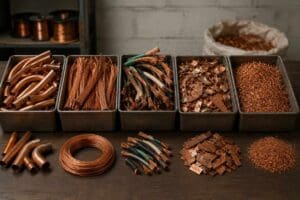
Copper looks the same to most people. Reddish, metallic, heavy. It is easy to assume that all of it is worth roughly the same and that more of it is always better. Neither assumption is true. Scrap copper is graded on purity, condition, and contamination, and the difference between the highest and lowest grades can be as wide as $2.50 per kilogram versus $11.75 per kilogram for the same metal.
Understanding these misconceptions is not just interesting. It is worth real money on every load. You can see the current grade by grade price breakdown on the Austick scrap copper prices Sydney page before you bring your next load in.
Misconception 1: Heavier Loads Always Mean More Money
This is the most widespread misunderstanding in the scrap copper market, and it costs sellers a lot of money. Weight matters, but it is secondary to grade. A 10 kilogram load of clean bare bright copper will very likely pay more than a 15 kilogram load of insulated wire, because the rate per kilogram on bare bright is up to four times higher.
Purity outweighs volume every time. A small pile of properly prepared, clean copper will consistently outperform a large pile of mixed or contaminated material. If you are spending time collecting and transporting copper, it is worth taking the extra step to ensure the quality of what you bring in matches the effort you are putting in.
- Bare bright copper: approximately $10 to $11.75 per kilogram.
- Insulated copper wire: approximately $2.50 to $4.50 per kilogram.
- A 10 kg load of bare bright outearns a 15 kg load of insulated wire.
- Focus on grade before volume. Preparation pays better than accumulation.
Misconception 2: You Can Mix Everything in One Load
Bringing copper to a scrap yard in a single mixed pile is one of the most reliable ways to receive a poor payout. When grades are mixed together, the entire load is assessed at the rate of the lowest grade present. A bin of clean No. 1 copper pipe that includes a handful of insulated wire will come in at insulated wire rates.
Separating your copper into grades before arriving at the yard takes minutes and can double your return on a typical load. Our team at Austick assesses each container on its own merits. As covered in our scrap metal recycling Sydney guide, sorted and labelled loads move through assessment faster and receive more accurate pricing. Use separate bins for bare bright, No. 1 copper pipe, No. 2 copper, and insulated wire. The ten minutes you spend sorting is consistently the best paid ten minutes in the scrapping process.
Misconception 3: Burning Off Insulation Increases the Value
This misconception is so common and so damaging that it deserves special attention. Burning insulation off copper wire is not a shortcut to better pricing. It is both an environmental offence under Australian law and a guaranteed way to reduce the quality of your copper.
When insulation is burnt off, the copper beneath is exposed to heat and combustion byproducts. The result is a layer of carbon residue and surface oxidation that lowers the copper grade. Burnt copper is assessed below clean No. 2 copper and sometimes below mixed grades. You will receive less per kilogram for burnt copper than you would have for the unburnt insulated wire. The correct way to remove insulation is with a mechanical wire stripper, which takes insulated copper wire to bare bright copper status cleanly and without any damage to the metal.
Misconception 4: Brass Is the Same as Copper
Brass is a copper alloy. It contains copper, but it is not the same material as copper, and it is not priced the same way. Brass includes zinc along with other elements, and it requires different processing to recover the copper content. When brass fittings, valves, taps, or fixtures are mixed into a copper load, they contaminate the copper grade.
Brass has strong scrap value in its own right and is absolutely worth selling separately. Austick accepts brass along with other scrap metals. You can see what we pay on the brass scrap prices Sydney page. If you are not sure whether a fitting is brass or copper, the simplest test is colour: brass has a more golden, yellow tone while copper is distinctly reddish orange. A magnet will attract neither metal, so colour is your primary guide.
Misconception 5: Old or Tarnished Copper Is Not Worth Selling
This misconception leads to valuable material being thrown into the bin or left to rust further in a shed. Copper does not lose its fundamental value when it ages. Tarnish and surface oxidation are cosmetic issues, not structural ones. A copper pipe that has been sitting for twenty years still contains exactly the same amount of pure copper metal as a brand new offcut.
Corroded or heavily tarnished copper will be assessed at a lower grade than bright, clean copper, but it still holds genuine scrap value. At current Australian rates, even corroded copper achieves around $8 to $9 per kilogram. That is far better than throwing it away. If the tarnish is light, a gentle wipe before you bring the load in can sometimes move material up a grade.
Misconception 6: All Scrap Yards Pay the Same Rate
Copper has a global market price, but how that translates to what you receive at a yard depends on the individual recycler. Rates vary based on buying capacity, operating costs, local demand, and grading accuracy. Some yards also apply inconsistent grading, which means material that qualifies as No. 1 copper at one yard might be assessed as No. 2 copper at another.
Choosing a recycler with transparent, published pricing and a reputation for accurate assessment protects your payout. It also removes the guesswork from the transaction. When you arrive at a yard knowing the current rate per kilogram for each grade, you can have a confident and informed conversation about your load.
Misconception 7: Small Loads Are Not Worth the Trip
People often accumulate copper in the shed and hold off on selling it because they believe they need a large volume to make the trip worthwhile. This is understandable as a time management decision, but it can mean good copper sits unprotected in the elements for months, accumulating moisture, tarnish, and contamination that lower its grade.
Copper is one of the highest value scrap metals available. Even a modest amount of clean copper pipe or stripped wire adds up quickly at current Australian rates. If you are generating copper regularly through your trade or property, consider setting up a free pickup arrangement with Austick so your copper is collected regularly before it degrades in storage.
Misconception 8: Air Conditioner Copper Is Low Value
Air conditioning units are actually one of the better sources of copper in the domestic and commercial market. A standard residential split system contains several kilograms of clean copper tubing. The misconception arises because the copper in an air conditioner is surrounded by aluminium fins, steel brackets, and other components that look like they reduce the value. Separated correctly, the copper tubing itself is clean, high grade material. Our air conditioning recycling service is specifically designed to help clients extract maximum value from these units, which are a major source of quality copper for electricians and HVAC tradespeople across Sydney and NSW.
Misconception 9: The Price on the Internet Is What You Will Get
Published copper scrap prices are a useful benchmark, but they represent the market at a point in time for a specific grade of material. The price you receive at a yard will depend on the grade and condition of your actual copper, the current rate on the day of your visit, and any adjustments for contamination, moisture, or unusual material composition.
This is not a reason for concern. It is simply how copper pricing works. If you arrive with well prepared, clearly sorted copper that matches the advertised grade, you will receive the advertised rate. The gap between the published price and what sellers actually receive is almost always a result of condition or contamination rather than anything the yard is doing wrong.
Conclusion
Getting the right value for your scrap copper is not complicated, but it does require understanding how the market actually works rather than relying on assumptions. Grade drives price. Sorting protects your grade. Preparation is where your money is made before you ever arrive at the yard. If you have a load of copper ready to sell and you want a fair, competitive assessment from a recycler that knows the material, contact Austick Copper Recycling today. Call us on 0401 282 852 or bring your load directly to 281 Princes Highway, Kembla Grange NSW. We pay on the spot and offer free pickup for eligible loads across Greater Sydney and NSW.
FAQs:
Does heavier scrap copper always mean a higher payout?
Not necessarily. A lighter load of clean bare bright copper can pay more in total than a heavier load of insulated wire, because the rate per kilogram is up to four times higher for the cleaner material. Preparing your copper to the highest possible grade is a more reliable route to a strong payout than simply accumulating more weight.
Is corroded or discoloured copper worth selling?
Yes. Corroded or tarnished copper still holds genuine value and should never be thrown away. It will be assessed at a lower grade than clean copper, but at current Australian rates even corroded copper achieves around $8 to $9 per kilogram. A light clean before your visit can sometimes improve the assessment.
Can I burn insulation off copper wire to increase its value?
No. Burning insulation is illegal in Australia under environmental law and actually reduces the copper grade. The burning process leaves carbon residue and surface oxidation that lowers the value below what unburnt insulated wire would have achieved. Always use a mechanical wire stripper to remove insulation cleanly.
Do all scrap yards pay the same rate for copper?
No. Rates vary between yards based on buying capacity, operating costs, and grading standards. Some yards use inconsistent grading, which can reduce your payout even for well prepared material. Choosing a specialist copper recycler with transparent, published pricing protects your return on every load.
Does brass count as copper scrap?
No. Brass is a separate alloy and must be kept and sold separately from copper. Mixing brass fittings or fixtures into a copper load will contaminate the grade and reduce your payout. Brass still has strong scrap value on its own, and Austick accepts and prices brass separately from copper scrap.reasonably clean. An organised load makes assessment faster and reduces the chance of downgrading.